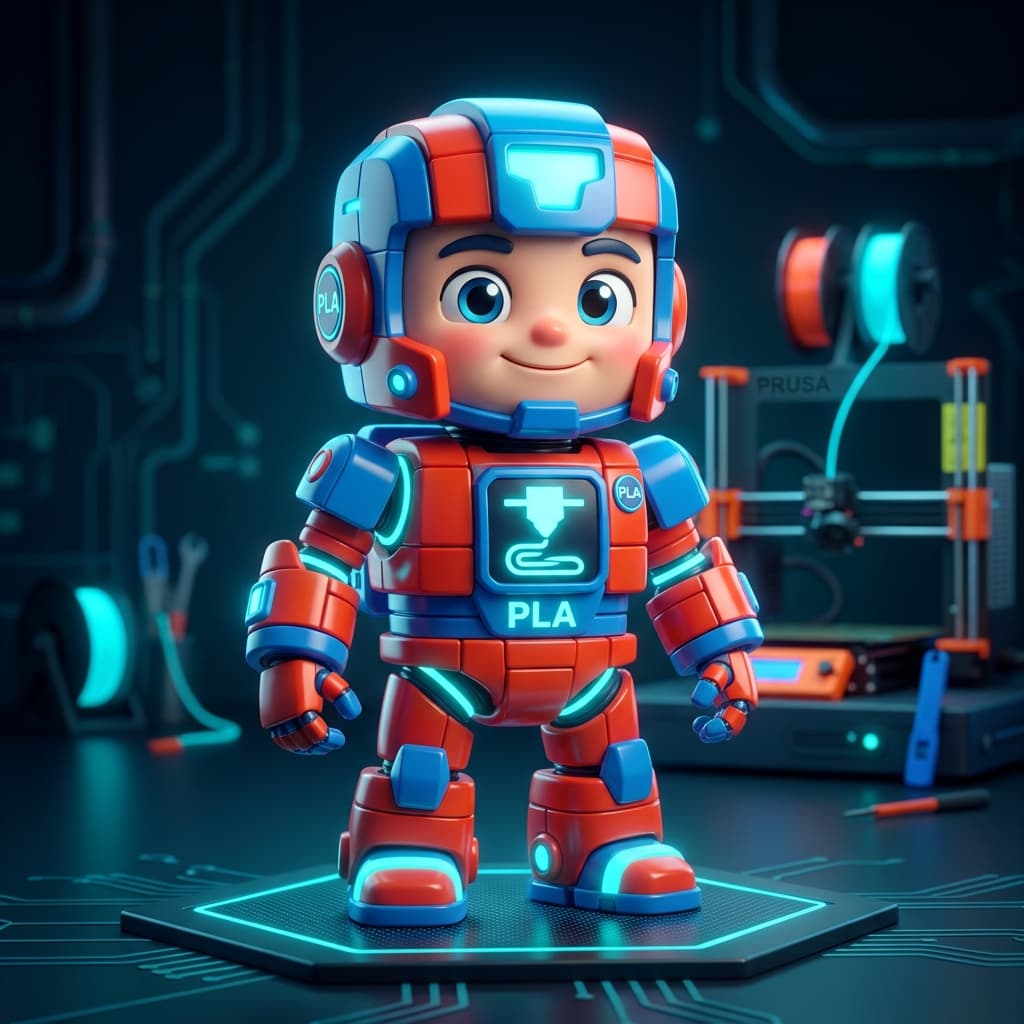
Filament Friday: PLA – Your Gateway to 3D Printing Excellence!
Welcome back to another sizzling Filament Friday, fellow makers! Today, we're shining our spotlight on the undisputed king of desktop 3D printing: Polylactic Acid, or as we affectionately call it, PLA. For many, PLA was their first love in the world of additive manufacturing – and for good reason! Here at ThinkerPrint, your go-to 3D printing studio, we know PLA like the back of our extruder, and we're ready to share all its secrets.
What is PLA, Anyway?
Before we dive into the nitty-gritty, let's get acquainted. PLA is a thermoplastic polymer derived from renewable resources like corn starch, tapioca roots, or sugarcane. That's right, it's a bioplastic, making it a more eco-friendly choice compared to many other filaments. It’s accessible, versatile, and the perfect starting point for anyone entering the magical world of additive manufacturing.
The Superpowers of PLA: Why It Reigns Supreme
PLA isn't just popular; it’s genuinely fantastic for many applications. Here's why makers, from beginners to pros, keep coming back to it:
- Beginner-Friendly: Oh, so easy to print! PLA requires lower print temperatures and doesn't demand a heated bed, although it helps. It's forgiving, meaning fewer failed prints and more joy.
- Minimal Warping: Unlike some trickier filaments, PLA exhibits very little warping or shrinking during cooling. This means your parts stay true to their design.
- Eco-Conscious Choice: Being derived from natural resources and biodegradable under industrial composting conditions, PLA is a step towards more sustainable 3D printing.
- Vibrant Colours & Finishes: PLA comes in an astonishing array of colours, transparencies, and unique finishes – from silky smooth to glitter-infused. Your imagination is the only limit!
- No Fumes, No Fuss: Printing with PLA produces a barely noticeable, often sweet, odour. No need for intensive ventilation setups, making it ideal for home or office environments.
PLA's Kryptonite: Understanding its Limitations
Even heroes have weaknesses, and PLA is no exception. Knowing these helps you choose the right filament for the job:
- Brittle Nature: While strong, PLA can be brittle. It's not ideal for parts that need to withstand high impacts or significant bending.
- Low Heat Resistance: This is PLA's biggest Achilles' heel. It begins to soften and deform at relatively low temperatures (around 60°C). Don't leave your PLA prints in a hot car!
- UV Degradation: Prolonged exposure to direct sunlight and moisture can cause PLA to become brittle and degrade over time, making it less suitable for long-term outdoor applications.
- Not Always Food Safe: While the raw material is often considered food safe, the printing process itself can introduce contaminants, and printed parts are porous. Always exercise caution.
Where PLA Truly Shines: Best Uses for Your Prints
Thanks to its ease of use and good aesthetics, PLA is perfect for a multitude of projects. It’s a staple for rapid prototyping and general creative needs!
- Prototypes & Concept Models: Quickly bring your ideas to life. PLA’s ease of printing makes it perfect for iterative design and testing form factors.
- Decorative Items: Vases, sculptures, intricate artistic pieces – PLA handles them beautifully with stunning detail.
- Toys & Figurines: Perfect for creating fun, detailed models for personal enjoyment or gifts.
- Architectural Models: Showcase designs with precision and vibrant colours.
- Jigs & Fixtures (Non-Load Bearing): For light-duty shop aids where heat isn't a factor.
Getting Technical: PLA Print Settings at ThinkerPrint
Ready to load up your printer? Here are the typical settings that yield fantastic results with PLA:
- Print Temperature: 190°C - 220°C (Start around 200°C and adjust for your specific printer and filament brand).
- Bed Temperature: 20°C - 60°C (A heated bed isn't strictly necessary but helps with adhesion and prevents warping. If you don't have one, painters tape or glue stick work wonders!).
- Enclosure: Not required.
- Cooling Fan: Highly recommended, usually 100% after the first layer.
The Final Word: Embrace the PLA Power!
PLA is an incredible gateway filament, offering a fantastic balance of ease of use, aesthetic quality, and affordability. Whether you're just starting your 3D printing journey or looking for a reliable material for your next prototype, PLA is a champion you can count on.
Got a brilliant idea? ThinkerPrint is here to help you bring it to life, offering top-tier 3D printing services and expert advice. Happy printing, and see you next Filament Friday!