When you're deciding between FDM (filament-based) and SLA (resin-based) 3D printing, you're really choosing between two fundamentally different manufacturing philosophies. Both work, both are proven, but they excel in different situations, and picking the wrong one wastes time and money.
How Each Technology Actually Works
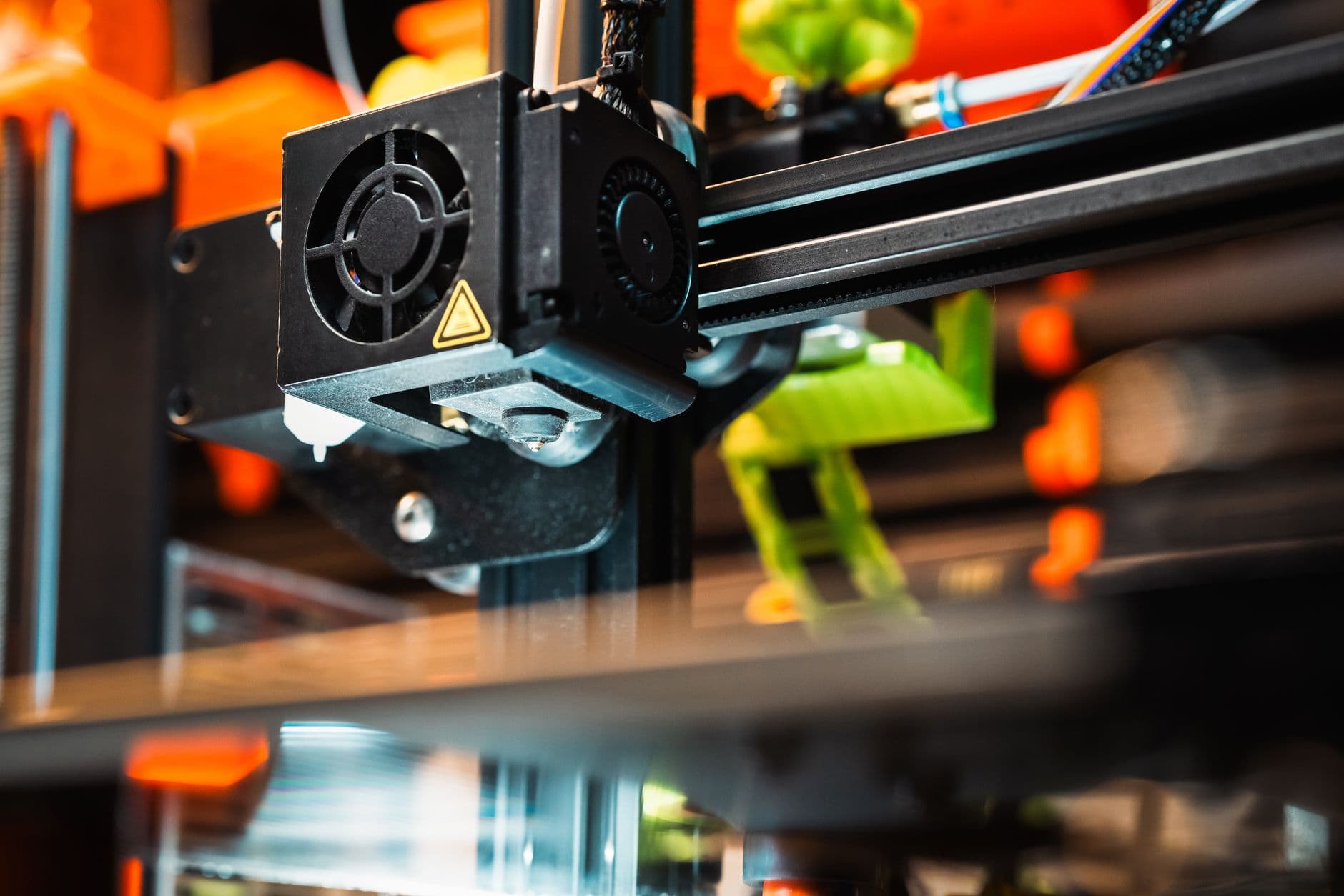
FDM melts thermoplastic filament and extrudes it layer by layer, building up your part from the ground. Think of it like a hot glue gun that never stops: precise, but still laying down physical material in a continuous path. SLA uses a UV laser to harden liquid resin one layer at a time, creating parts that are chemically solid from the start. The resin bath approach means the printer can work much faster because it's curing entire layers in parallel rather than tracing a path across each one.
That mechanical difference drives everything else: speed, surface quality, material options, and workflow complexity.
Surface Finish and Detail
If you care how the part looks straight off the printer, SLA wins cleanly. Because the laser can resolve finer details than an FDM nozzle, and because there's no nozzle dragging across the surface, SLA parts come out smooth and look finished. FDM parts have visible layer lines (you can feel them), and internal geometry is often rougher. You can sand and smooth an FDM part afterward, but that's extra work and cost.
That said, FDM layer lines aren't always a deal-breaker. For functional prototypes, jigs, brackets, or anything that gets bolted to something else, the surface texture doesn't matter. Where surface finish matters (consumer-facing geometry, display models, parts that will be painted or anodized later), SLA is the smarter choice.
Strength and Material Properties
Material properties are where the two processes really diverge. FDM gives you access to engineering plastics: PLA, ABS, PETG, nylon, and carbon-fiber reinforced variants. These materials are chemically identical to industrial thermoplastics, so an FDM part made in PETG or ABS has genuine mechanical properties you can rely on for functional prototypes or even end-use parts. Parts printed in these materials can be tough, heat-resistant, and durable.
SLA resins have improved enormously, but they're still specialized formulations. Standard SLA resins are brittle: good for detail, bad for parts that flex or absorb impact. High-performance SLA resins exist (tough resins, flexible resins, engineering resins), but they're more expensive and require careful handling. SLA parts are also typically isotropic, with uniform strength in all directions, whereas FDM parts can be anisotropic depending on print orientation and infill patterns. For a load-bearing prototype, FDM with the right material and infill density is often the safer bet.
Speed
SLA is faster per layer, but you might not print as many layers. A small SLA part can be done in hours. FDM can take significantly longer because the nozzle has to trace every detail. However, FDM's lower material cost and simpler workflow mean you're more likely to just let it run unattended. With SLA, you're managing post-processing: draining excess resin, washing the part, curing it under UV, all of which adds time back in.
For a quick one-off part, SLA is usually faster. For a batch of parts or if you can schedule prints to run overnight, FDM's slower speed is less of a practical problem.
Cost and Consumables
FDM has the lowest barrier to entry and the lowest per-part cost. Filament is cheap, printers are cheap, and maintenance is straightforward. The main consumable cost is material.
SLA resin costs more per milliliter than filament, and you're also paying for consumables like resin tank liners if the printer uses them. Supports and failed prints waste more material because resin has to be disposed of carefully. However, if you're printing small parts, you use proportionally less resin, which can work in your favor. For large parts, FDM becomes more economical.
Post-Processing and Cleanup
People consistently underestimate SLA cleanup. After an SLA print, the part is wet with uncured resin. You have to wash it (usually in isopropyl alcohol or specialized solutions), then cure it under UV light or in sunlight. The resin smell is real, and disposal needs care. You can't just put it in the bin. If you're in a shared office or can't handle chemical solvents comfortably, SLA adds friction.
FDM is cleaner. The part comes off the bed, you remove supports, and you're done. It's physically less messy and there's no chemical waste stream.
Design Constraints
FDM requires support material underneath overhangs, and those supports take time to remove and leave small scars. You have to design around nozzle size and minimum feature sizes. Wall thickness matters: too thin and the extruder can't maintain structural integrity.
SLA also uses supports, but they're thinner and leave smaller marks. Fine details and thin walls are much easier to print in resin. If your design has delicate geometry, complex undercuts, or tiny features, SLA is less constrained.
Which Should You Actually Choose?
Choose FDM if you're prototyping mechanical parts, need toughness or heat resistance, want the lowest material costs, prefer a simple workflow, or can tolerate visible layer lines. It's the reliable workhorse. Most functional prototypes get printed in FDM for good reason.
Choose SLA if you need high surface finish out of the box, have intricate geometry with fine details, want an isotropic part with uniform properties, or are building display models, jewelry, dental applications, or anything where visual quality matters before finishing. If you're okay with post-processing chemicals and can let parts cure properly, SLA will give you sharper details and a more refined final product.
In practice, many projects benefit from both. A complex assembly might start in SLA for accurate fit and visual assessment, then refined parts get printed in FDM for durability testing. The choice usually isn't either/or. It's about which process solves the specific problem in front of you.